Guide
Heart attack warning signs, and when to call 911
The most common heart attack sign is pressure, squeezing or pain in the center of the chest. Others include pain in the arms, back, neck, jaw or stomach, shortness of breath, a cold sweat, nausea and light-headedness. Women may also feel anxiety, vomiting or unusual tiredness. If you notice any of these, call 911 right away, even if you are not sure.
Written by the Cardio Clear 7 research deskUpdated
01The basics
What happens during a heart attack?
A heart attack happens when blood flow to part of the heart muscle is blocked. Without oxygen, that muscle starts to die, and every minute counts.
The blockage is usually a clot that forms on fatty plaque inside a heart artery. Plaque builds slowly over years, often with no symptoms. The attack itself can start suddenly or creep in over hours.
Treatment opens the artery with medicines, a balloon and stent, or bypass surgery (Cleveland Clinic - Widowmaker). The sooner it starts, the more heart muscle is saved and the better the chance of survival (Cleveland Clinic - Widowmaker).
02The signs
What are the most common heart attack warning signs?
Chest discomfort leads the list for both men and women (AHA - Heart Attack Warning Signs). It may feel like pressure, fullness or a heavy weight more than sharp pain, and it can fade and come back.
- ChestPressure, squeezing, fullness or pain in the center of the chest
- Arms, back, neck, jawPain or discomfort in one or both arms, the back, neck, jaw or stomach
- BreathShortness of breath, with or without chest discomfort
- OtherCold sweat, nausea or light-headedness
- Women may also feelAnxiety, vomiting, upset stomach and unusual tiredness or weakness
Call 911Do not drive yourself, and do not wait to see if a supplement helps. Treatment works best when it starts fast.
Signs from the American Heart Association (AHA - Heart Attack Warning Signs); on the "widowmaker" blockage, see Cleveland Clinic (Cleveland Clinic - Widowmaker).
| Where or what | How it can feel | Easy to mistake for |
|---|---|---|
| Center of the chest | Pressure, squeezing, fullness or pain lasting minutes, or going and coming back | Heartburn or a pulled muscle |
| Arms, back, neck, jaw, stomach | Ache or discomfort in one or both arms, or higher up | Toothache, a stiff neck or back strain |
| Breathing | Short of breath, with or without chest discomfort | Being out of shape |
| Body-wide | Cold sweat, nausea, light-headedness | Flu or low blood sugar |
| Often in women | Anxiety, vomiting, upset stomach, unusual tiredness or weakness | Stress or a stomach bug |
Signs come from the AHA (AHA - Heart Attack Warning Signs). You do not need all of them. One sign that feels wrong is enough to call.
03First minutes
What should you do if you think it is a heart attack?
Call 911 first. Paramedics can start care on the way and alert the hospital, which is faster than any car ride.
Call 911
Do it within minutes of the first sign. Do not wait to see if it passes or if a pill helps.
Stop and sit
Stop what you are doing and rest in a comfortable position while you wait.
Follow the dispatcher
The 911 operator will give you step-by-step instructions. Do what they say.
Have your list ready
Keep a list of your medicines and supplements in your wallet or phone for the crew.
Driving while having a heart attack puts you and others at risk, and an ambulance brings treatment to you. A reading over 180/120 with symptoms is also a 911 call (AHA - Understanding BP Readings).
04Not always classic
Do women have different heart attack symptoms?
Chest pain is still the most common sign in women (AHA - Heart Attack Warning Signs). Women are more likely than men to also have the less obvious signs, such as vomiting, an upset stomach, anxiety or a wave of deep tiredness.
These quieter signs are often brushed off as stress or a stomach bug. That delay is dangerous. If something feels new and wrong, call 911 and let the crew decide.
Older adults and people with diabetes may also feel milder or unusual symptoms. Shortness of breath or sudden weakness can be the main clue. The same rule applies: call.
05The widowmaker
What is a widowmaker heart attack?
A widowmaker is a full blockage of the left anterior descending artery, called the LAD (Cleveland Clinic - Widowmaker). This artery feeds about half of the heart muscle, so a blockage there is very serious.
Its warning signs are the same as any heart attack. There is no special set of hidden symptoms to learn. Treatment is the same too: restore blood flow as fast as possible (Cleveland Clinic - Widowmaker).
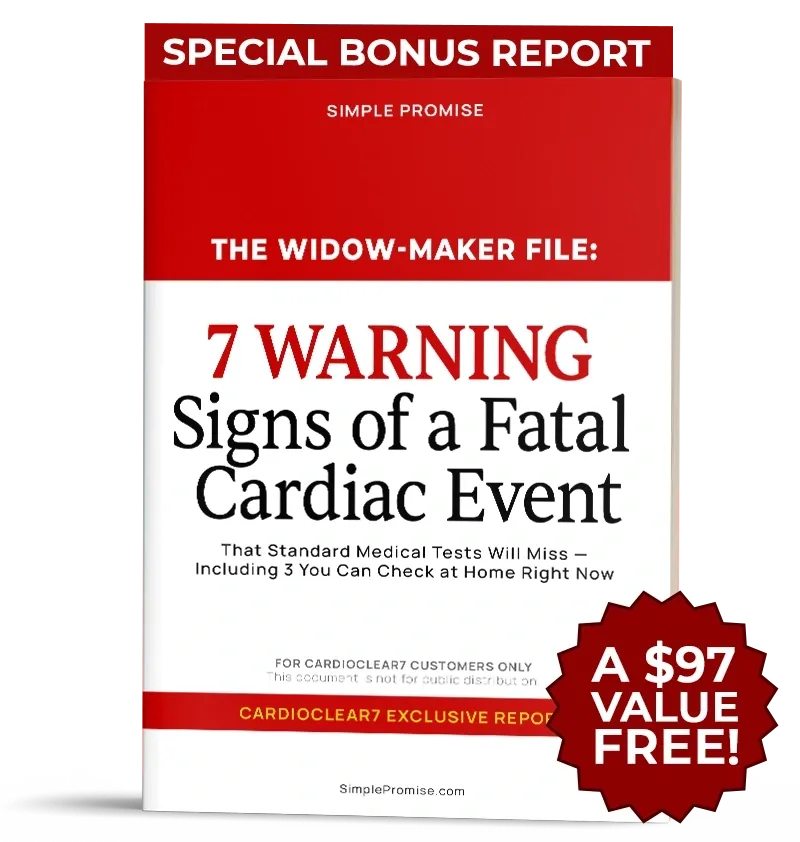
A brand promo image shows a report called "The Widow-Maker File: 7 Warning Signs of a Fatal Cardiac Event (That Standard Medical Tests Will Miss)". The store page lists no bonuses, so check at checkout. Learn the AHA signs above instead, and talk with your doctor about your own tests.
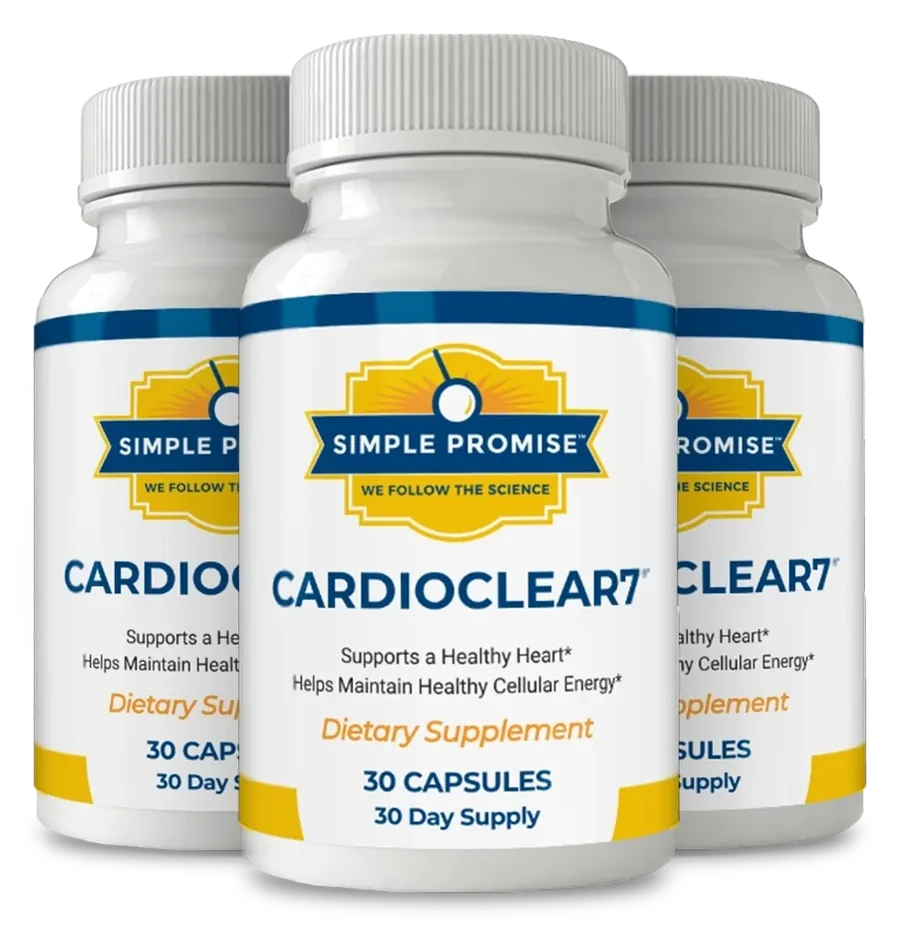
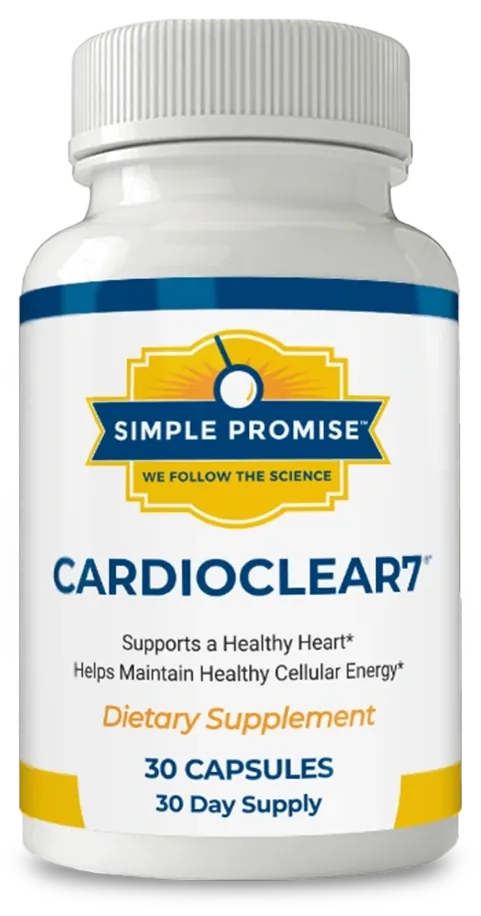
Cardio Clear 7: from $31 a bottle30 capsules · 1, 3 or 6 bottles · free US shipping · 365-day money-back
See packs06Supplements and reports
Can a supplement or bonus report protect you from a heart attack?
No. No study has tested Cardio Clear 7 for heart attacks, and it is not a treatment for heart disease. FDA does not approve supplements before they are sold (NIH ODS - What You Need to Know).
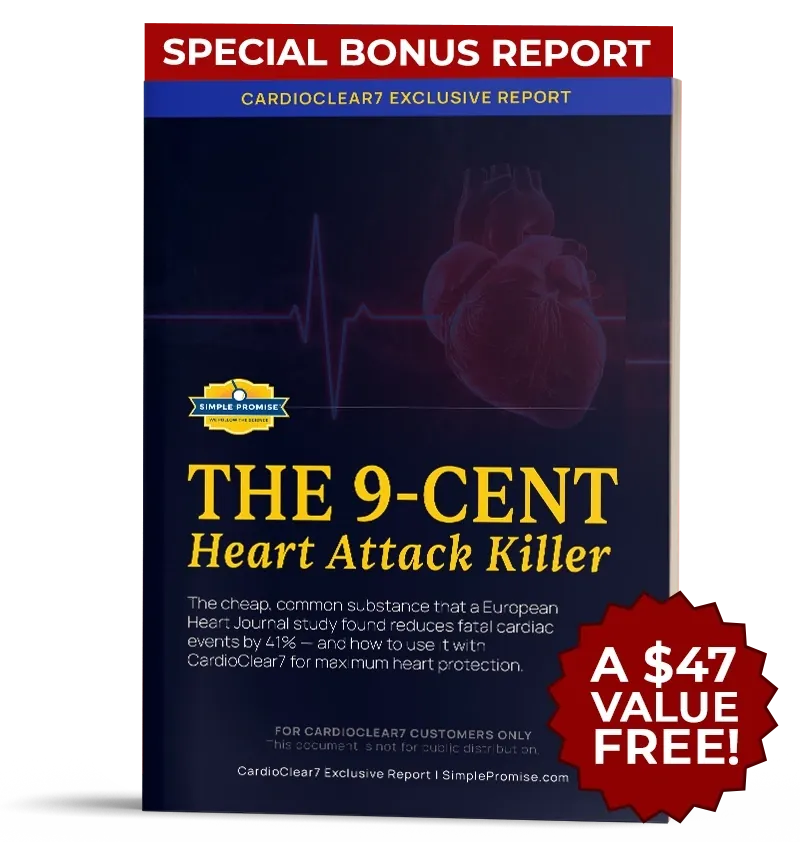
Another brand promo cover is titled "The 9-Cent Heart Attack Killer". That is an ad headline, not medical advice. The FTC expects health claims to rest on solid human trials, not animal studies or stories (FTC - Health Products Compliance Guide).
CoQ10 cut major heart events in one trial of people with diagnosed heart failure, at 300 mg a day on top of their usual drugs (Q-SYMBIO trial - JACC HF 2014). That is three times the capsule's dose, in a different group of people. It says nothing about stopping a heart attack in progress. Read more on our claims vs evidence page.
07Long term
Which everyday steps lower heart attack risk over time?
The AHA's Life's Essential 8 sums them up: eat better, move more, quit tobacco, sleep well, manage weight, and keep cholesterol, blood sugar and blood pressure in range (AHA - Life's Essential 8).
- Know your numbers: see our guides to blood pressure numbers and cholesterol numbers.
- Move most days: 150 minutes of moderate activity a week is the AHA target (AHA - Life's Essential 8).
- Sleep 7 to 9 hours: healthy sleep is one of the eight measures (AHA - Life's Essential 8).
- Take your medicine: Keep taking prescribed medicine; never stop or change it because of a supplement.
08Bottom line
Heart attack signs in one minute
Chest pressure, pain in the arm, back, neck or jaw, shortness of breath, a cold sweat, nausea or light-headedness: call 911. Do not drive yourself, and do not wait for a pill or a report to help.
09FAQ
Heart attack warning signs: questions people search
What are the first signs of a heart attack?
The first sign is often pressure, squeezing or pain in the center of the chest that lasts a few minutes or comes and goes. It may start with shortness of breath, a cold sweat, nausea or pain in the arm, jaw or back. Call 911 at the first sign.
What does heart attack chest pain feel like?
Many people describe heaviness, pressure, tightness or fullness rather than a sharp stab. It sits in the center of the chest and may spread to the arms, neck, jaw or back. It can fade and return. Any chest discomfort like this is a reason to call 911.
What are heart attack symptoms in women?
Chest pain is the most common symptom in women too. Women are also more likely to have anxiety, vomiting, an upset stomach and unusual tiredness or weakness, which can be mistaken for stress or a stomach bug. If something feels new and wrong, call 911 right away.
Can a heart attack happen without chest pain?
Yes. Some people, often women, older adults and people with diabetes, have mostly shortness of breath, nausea, a cold sweat, light-headedness or deep tiredness. The lack of chest pain does not make it safe. Call 911 for any of these signs, alone or together.
What is the widowmaker artery?
The widowmaker is the left anterior descending artery, or LAD, which supplies about half of the heart muscle. A full blockage there causes a widowmaker heart attack. Its warning signs are the same as any heart attack, and fast treatment improves survival, so call 911.
Should I drive to the hospital if I think I am having a heart attack?
No. Call 911 instead of driving yourself or having someone drive you. Paramedics can start treatment on the way and alert the hospital team, so care begins sooner. Driving while having a heart attack also puts you and other people on the road at risk.
Are the Cardio Clear 7 bonus reports medical advice?
No. The bonus report covers, such as the widow-maker and heart attack titles, are brand promo images, and the store page lists no bonuses. Their titles are ad headlines. For warning signs, rely on the American Heart Association list and call 911 when any sign appears.
10Who wrote this
Written and reviewed by
Pages built from the bottle, the official store listing, the brand info page and linked NIH, FDA, FTC and peer-reviewed sources.
Last updated . Read our editorial standards and how we check reviews. This website is run by a licensed U.S. retail desk, not by the manufacturer or by Simple Promise. We earn money when you buy through our order links.
Keep reading
More about Cardio Clear 7

Licensed U.S. retail desk for Cardio Clear 7
Ready to try Cardio Clear 7?
Check your medicines first, then pick a pack. Bigger packs cost less per bottle, shipping is free in the US, and the store's guarantee runs 365 days.
- Official store checkout
- 365-day money-back
- Free US shipping